About the artist
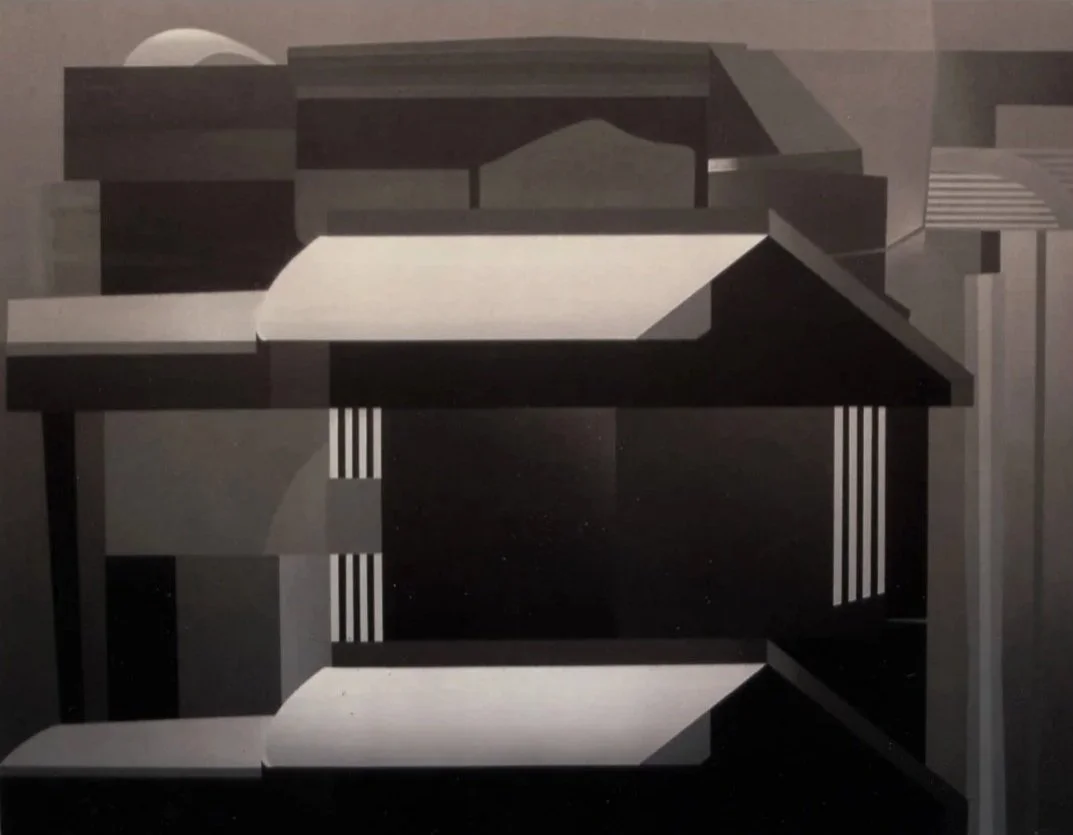
42” x 54”
another winter

museum
4’ x 4’
Mueller was born of German immigrant parents in Newark, NJ in 1929 and studied art and architecture before leaving Cooper Union in his early twenties to join contemporaries: Robert Motherwell, Carmen Cicero, Franz Kline, and his mentor: John Ferren. As a young artist his work was feature in shows, represented by Borgenicht Gallery and collected by the Whitney, Guggenheim, and Chicago Museums. He was written up in The New York Times, Esquire, and New Yorker Magazines. He won a Guggenheim Fellowship and acclaim at the Brussels Biennale before he was 25 years old.
His abstract paintings represent interiors, landscapes, and dream spaces. They stem from one man’s experience. He was a painter who spent nearly all day, every day, reading literature and philosophy, listening to music, watching the world, sorting through sensations, and then: transferring some of that onto canvas. So few contemporary artists spend as much time and effort in the pursuit of aesthetics as Mueller did.
His significant craftsmanship was integral to his work. It reflected the refinement and clarity with which he saw the world and of what he referred to as his “handprint” on each canvas.
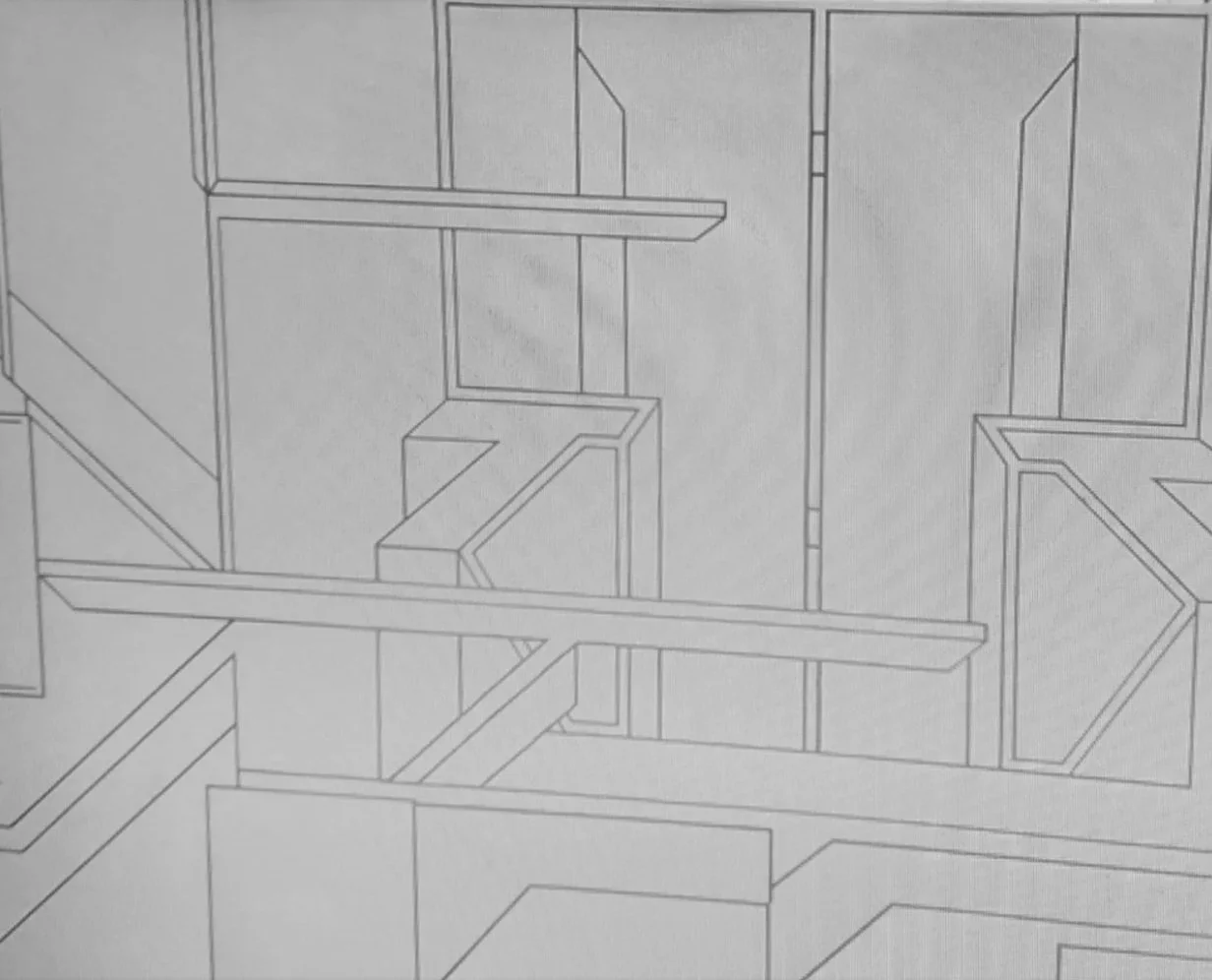
58” x 72”
ignoring red flags
By the 1960’s his work had changed: identified as Abstract Geometric or “Hard Edged Painting.” It was during this time that he also developed “Microtonal Color” a unique process that he created and used at times in combination with the large geometric shapes he ultimately became known for.
History of exhibitions
-
1952 Artists Gallery, NY
1955 Borgenicht Gallery, NY
1960 Borgenicht Gallery, NY
1963 Fairleigh-Dickinson Univ NJ
1964 Waddell Gallery, NY
1967 Waddell Gallery, NY
1972 Straley Gallery, NJ
1991 Caldwell College, NJ
2000 Sussex County College, NJ (Drawings)
2019 Sussex County College, NJ (Paintings)
2024 Hackensack Performing Arts Gallery, NJ
-
1955 The Guggenheim Museum ~ “Younger American Painters”
1955 Univ. of Illinois Biennial
1957 Whitney Museum of American Art “American Painters under 35"
1957 Dallas Museum of Fine Art ~ “Young Collectors”
1957 The Carnegie International
1958 Worcester Art Museum ~ “Some Younger Names”
1958 Venice Biennial ~ “American Painters Paint the City
1958 New York Art Foundation, Rome
1959 Whitney Museum of American Art
1959 Detroit Institute of Arts
1959 Brussels World’s Fair
-
1960 Philadelphia Academy of Art
1961 Whitney Museum Annual
1961 Brandeis Univ. Exhibition
1963 Whitney Museum Annual
1963 American Federation of Arts
1963 Brandeis Univ. Exhibition
1964 Art Institute of Chicago ~ “67th Annual American Exhibition”
1964 The New York World’s Fair
1965 Whitney Museum Annual
1965 Whitney Museum of American Art ~ “A Decade of American Drawings”
1966 Larry Aldrich Museum “Brandeis Univ. Creative Arts Awards
1967 Univ. of Illinois Biennial
-
1994 Paintings-NJ Center for Visual Arts
2000 Drawings-NJ Center for Visual Arts
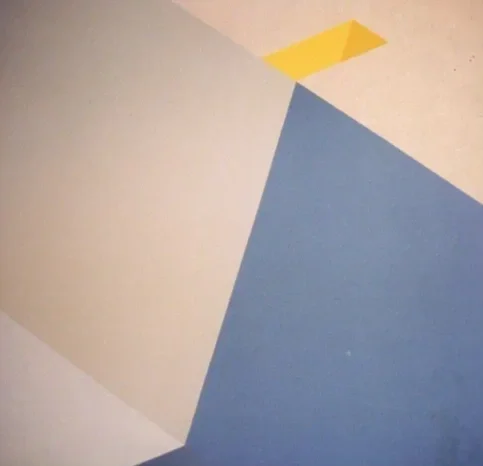
solid gold
1974, 6’ x 6’
“George Mueller’s work constitutes a serious and very impressive emulsion of representation, geometric Hard Edge and ‘color-painting’ with symbolic overtones. Immaculate architectures emerge from hundreds of stripes and rectangles, in flat, vibrant colors, rigidly symmetrical on either side of a central axis that is thrust forward or back by violent perspective. Not a trace of the Herculean craftsmanship remains, lending the works a sort of apparitional grandeur, like H.G. Wells plus LSD. The triumphant idiosyncrasy of the artist’s image, in relief against his obvious stylistic sophistication, is a little breathtaking.” (Reviews and Previews)
- Peter Schjeldahl of Art News, 1966
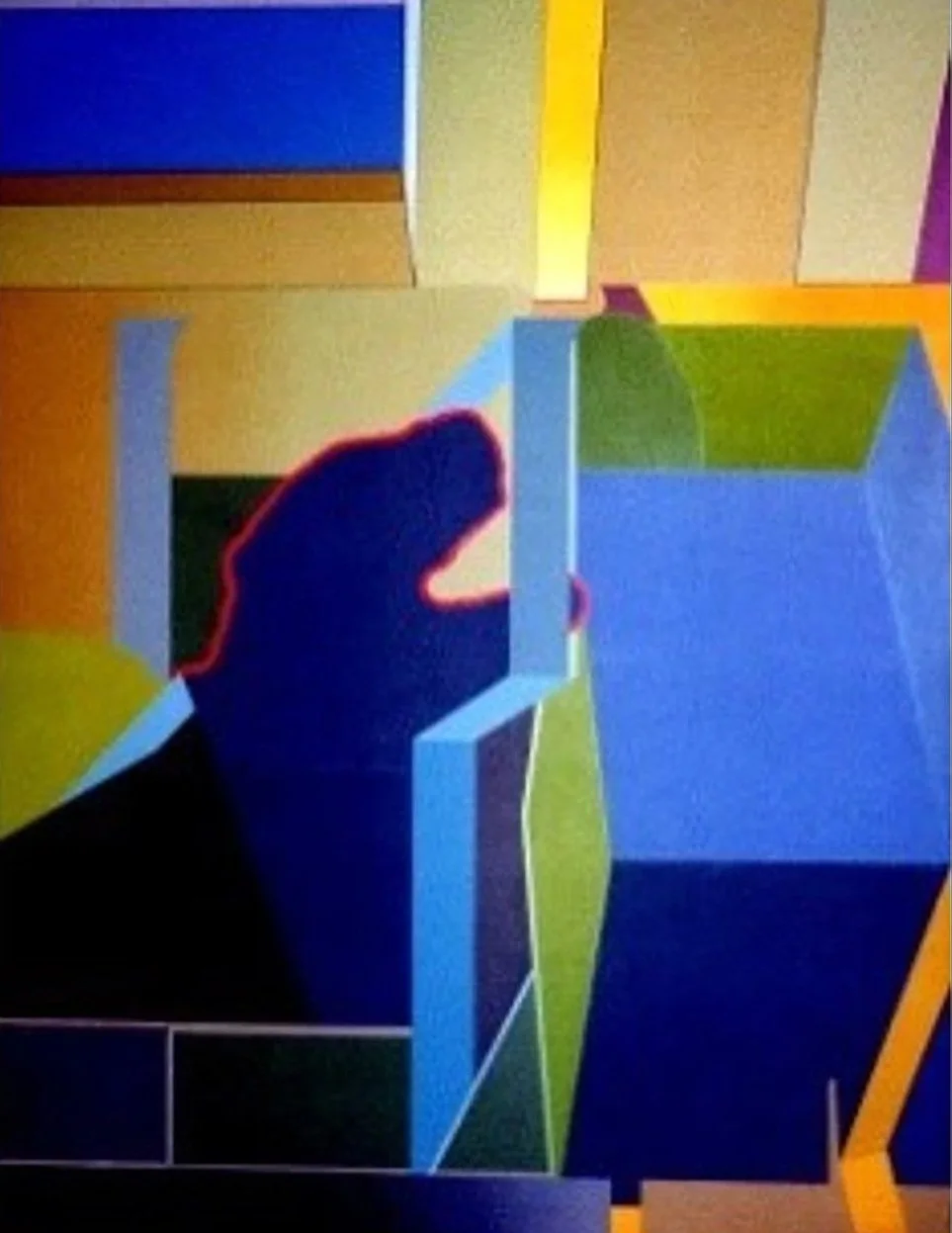
beast in fredon
2000, 4’ x 5’
Whether a show is good or bad is one point. Whether it is interesting or not is another. They don’t always correlate exactly. George Mueller is unusual in that he applies aggressive color not to pure abstraction but to a subject from real life—nothing more nor less than a porch, with verandas, windows, railings, trees—a motif he uses over and over again immaculately, like someone distilling and re-distilling an essence. Then having defined the scene (in black and white) he starts playing on it with color like a musician, a comparison he invites with titles like ‘Four Random Variations in 15 tones’ and ‘Anton Webern, Op5, No 3’.
The latter presumably refers to the third movement of Webern’s Five Pieces for String Quartet, and Mr. Mueller’s pictorial coding of it looks like a hip Mondrian. He then superimposes this schema over his theme, the old front porch, so that it looks like what “Home on the Range” in 12-tone would sound like (which is very exciting).
In his purification of the porch, an old Saturday Evening Post cover cliché, and his turning of this commonplace motif to uncommon purposes, Mr. Mueller is unique. His show is one of the most exciting in town.
- Brian O’Doherty, 1967
professional career
-
NJ Center for Visual Arts
Arts Center of Northern NJ
Bloomfield College
Fairleigh-Dickinson Univ.
Univ. of Rhode Island
Oklahoma Univ.
Sussex County College, N.J.
-
1956 Kuh, Katherine
American Artists Paint the City
1961 Goodrich, Lloyd
American Art of Our Century
1961 Art Institute of Chicago
Paintings-Art Institute of Chicago
1965 Whitney Museum
A Decade of American Drawings
1967 Allentown Art Museum
Sources for Tomorrow
1968 Robbins,Daniel
An American Collection
1974 Baur, John
The Whitney Museum of American Art
1981 Newark Museum
American Art in the Newark Museum
1989 Falk, Peter Hastings
Annual Exhibition Record-PA Academy of Fine Arts
2001 Davenport, R.
Davenport’s Art Reference
2003 Dunbier,Lonnie Pierson
The Artists Bluebook: 32,000 North American Artists
friends & family


